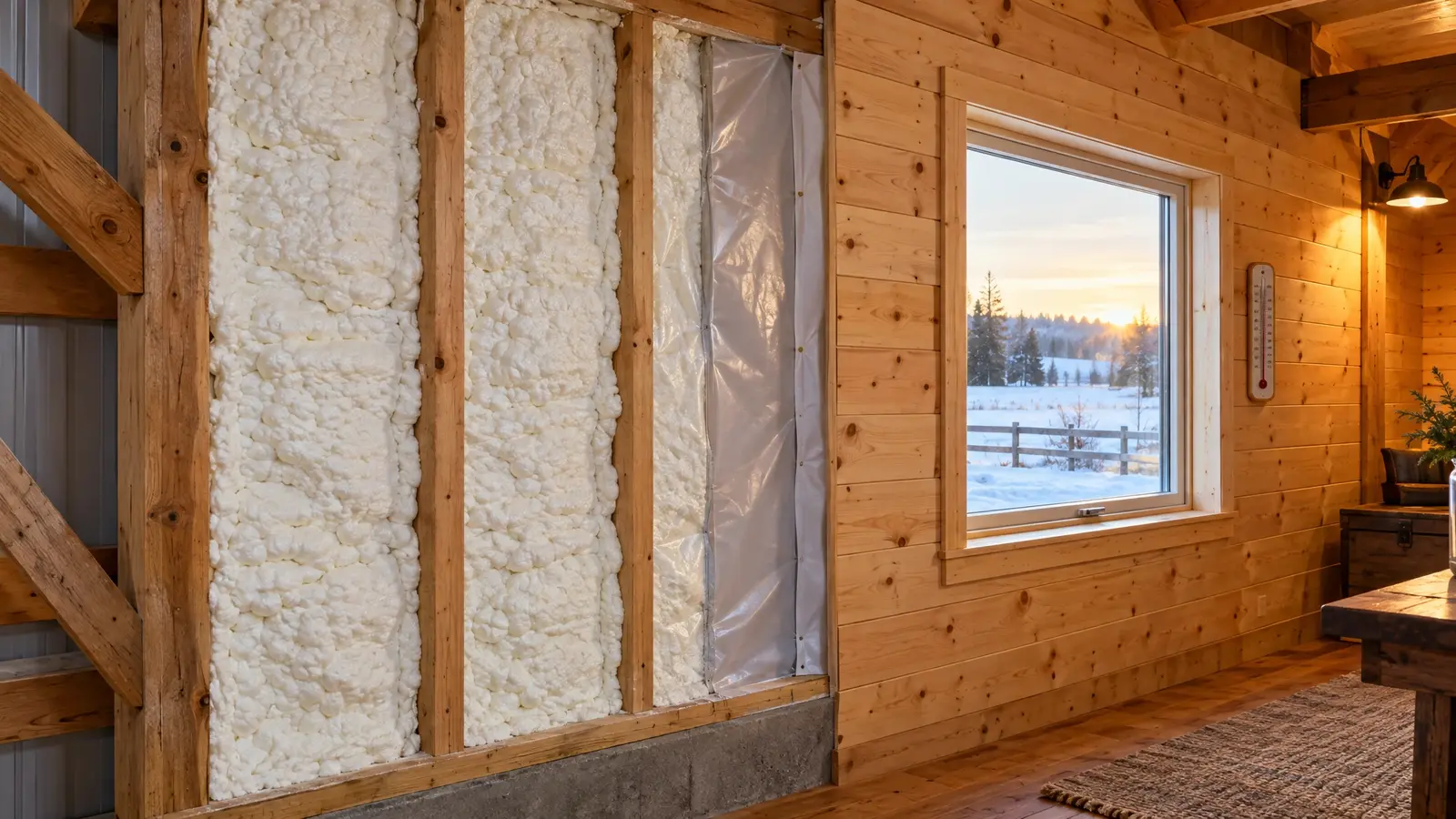
Why barns sweat
When warm, humid air touches a cold metal surface, water condenses. In a barn, that can drip on equipment, stored goods or animals and cause rust. Tennessee's humid summers and cool nights make it common.
The fix is to keep inside surfaces from getting cold, with insulation and air sealing, or to give moisture a controlled place to go.
Spray foam, batts and rigid board
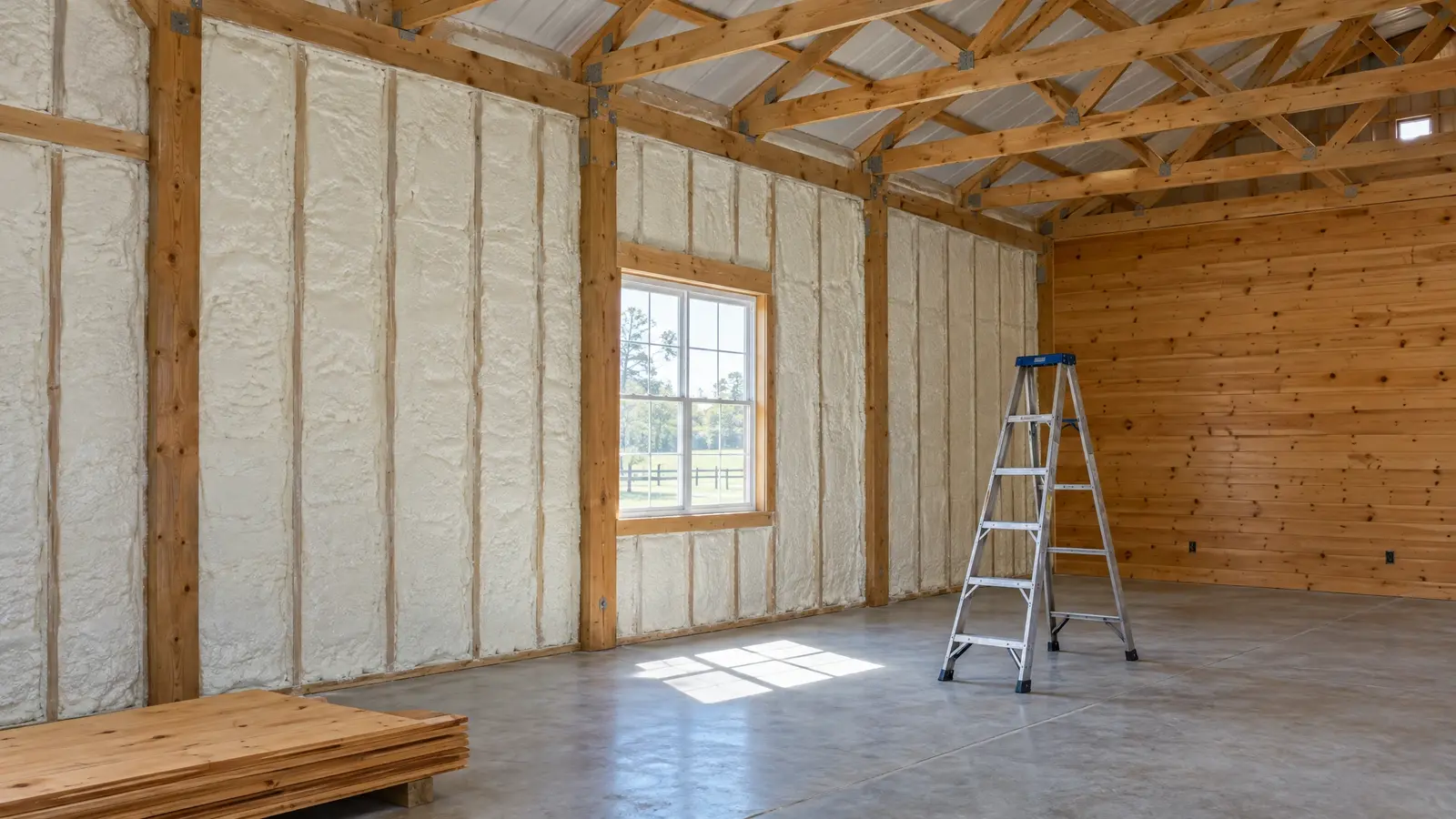
Closed-cell spray foam insulates, air-seals and adds a moisture barrier in one step, and it works well on metal. Batt insulation with a vapor control layer is economical for walls and ceilings. Rigid board can be used in some assemblies.
The best choice depends on use, budget and how finished the interior will be.
Ventilation still matters
A tightly sealed, insulated building needs a plan for fresh air. Horse barns and shops need ventilation to control moisture, fumes and heat.
We design ventilation and insulation together.
Finishing the inside
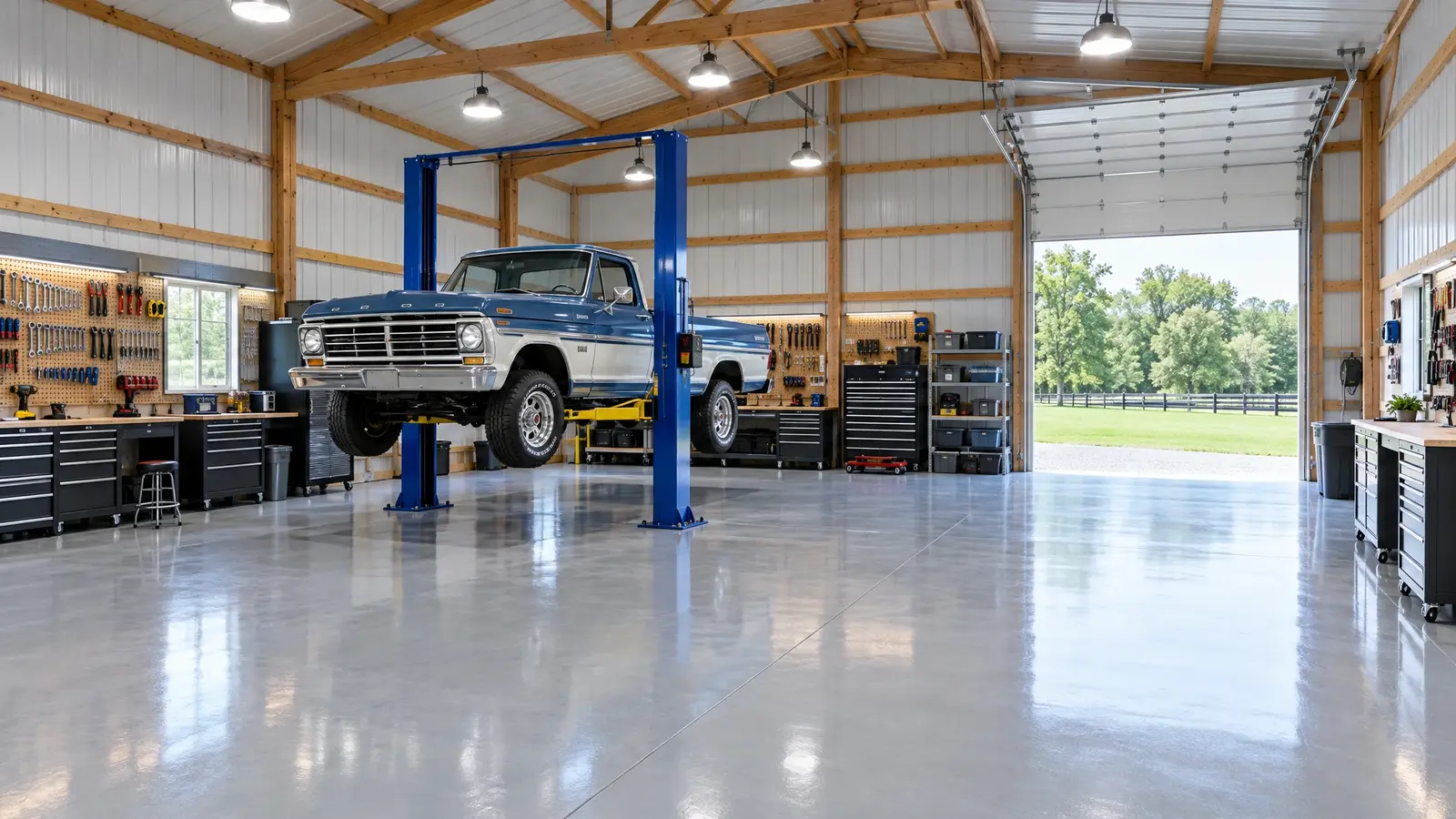
Interior options include drywall, wood paneling, liner panels or plywood. Light colors brighten the space, and durable finishes handle shop wear.
Heating and cooling
Size equipment to the insulated envelope. A well-insulated shop can be heated and cooled with a modest system, while a leaky one cannot.
Insulate and air-seal at the same time, and plan ventilation along with it.