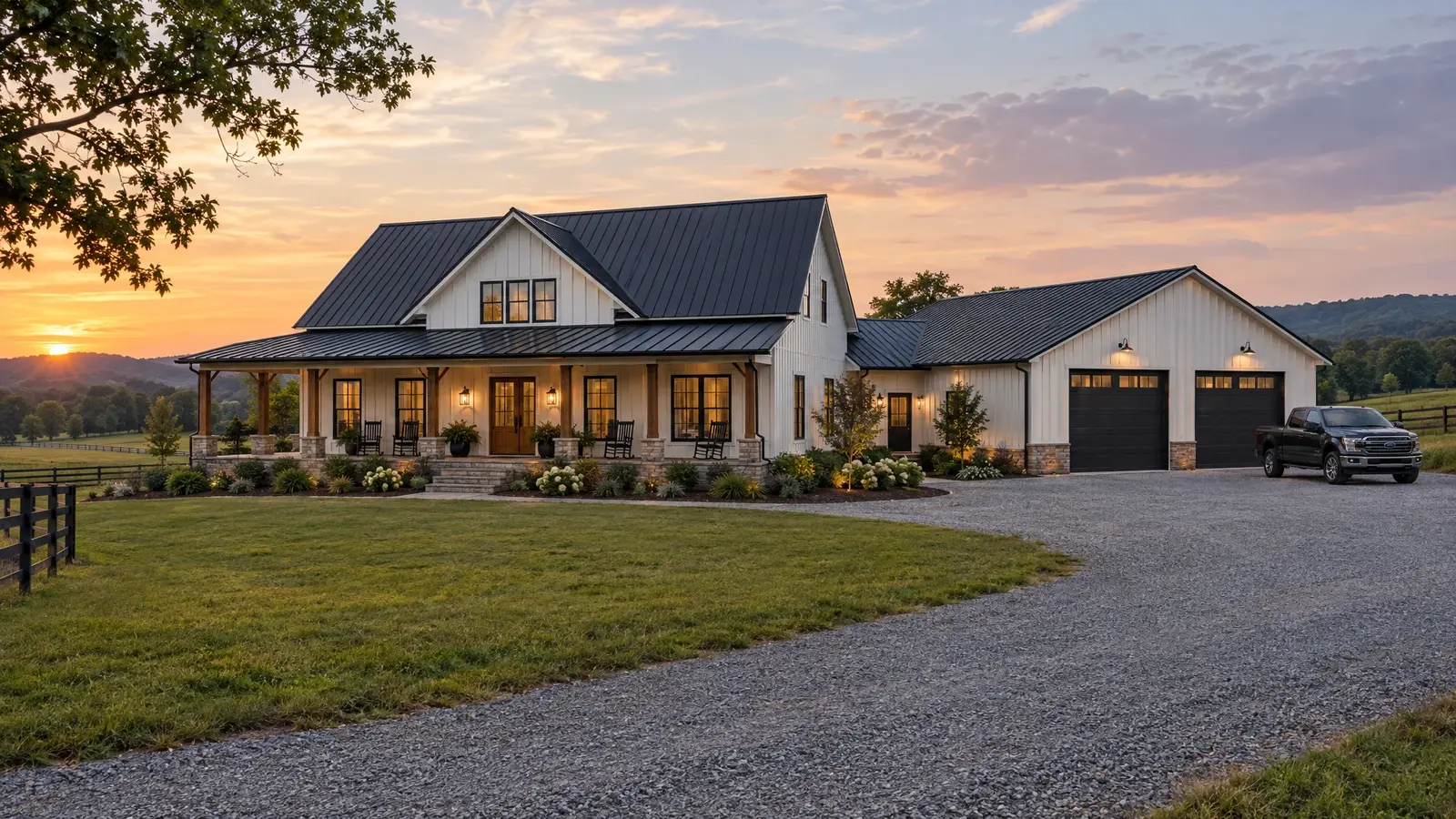
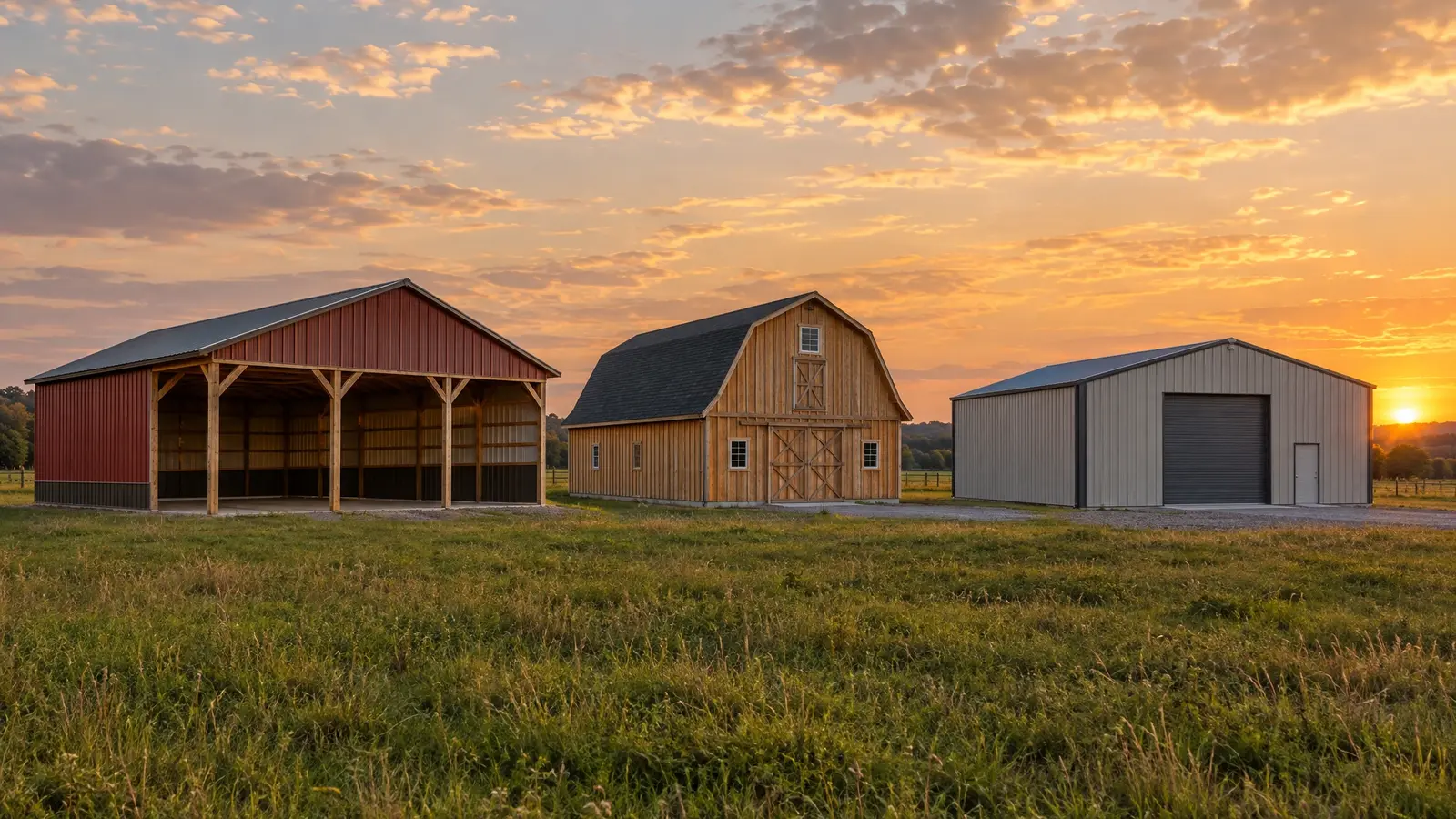
Post-frame: big spans, fast, flexible
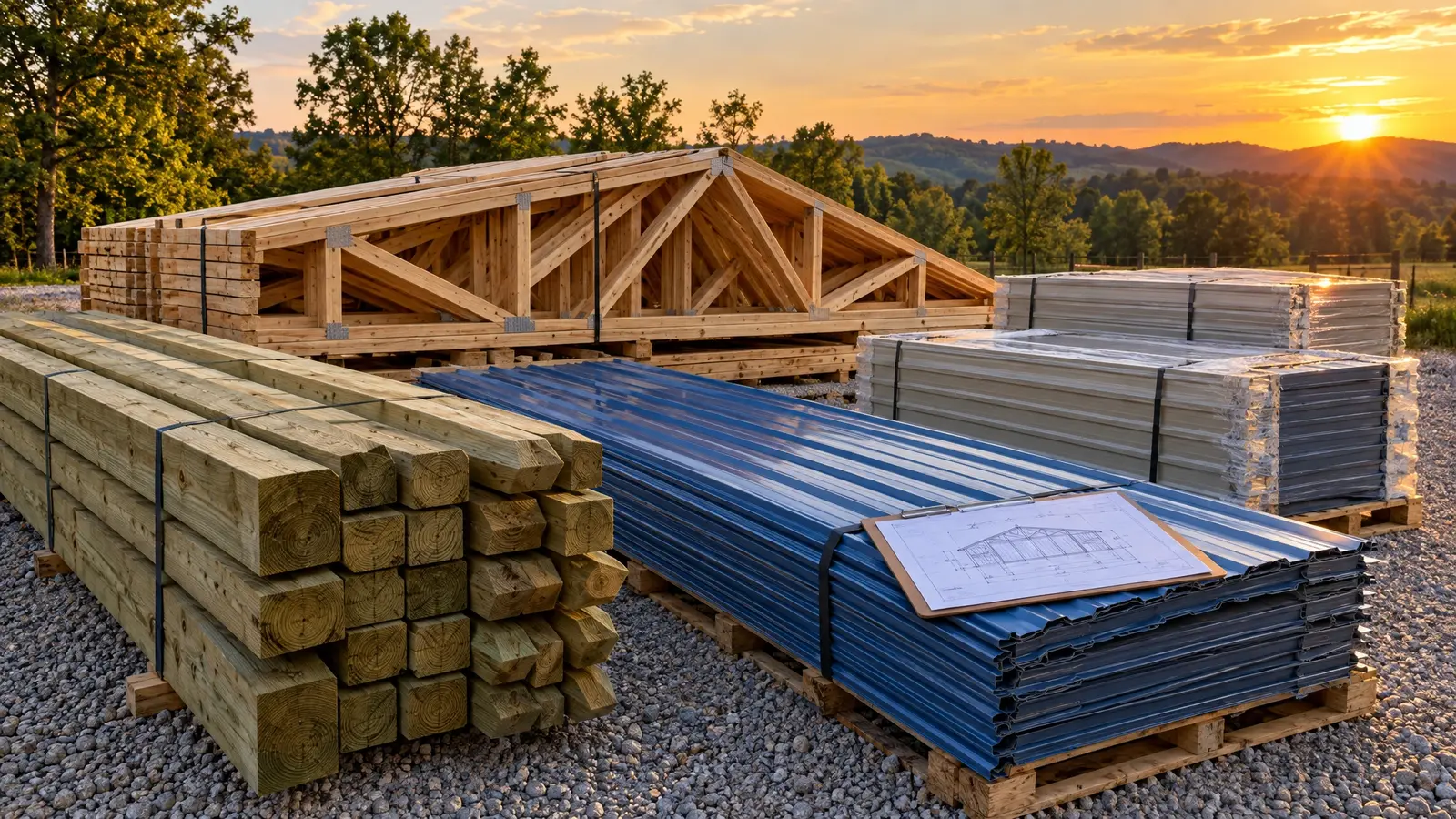
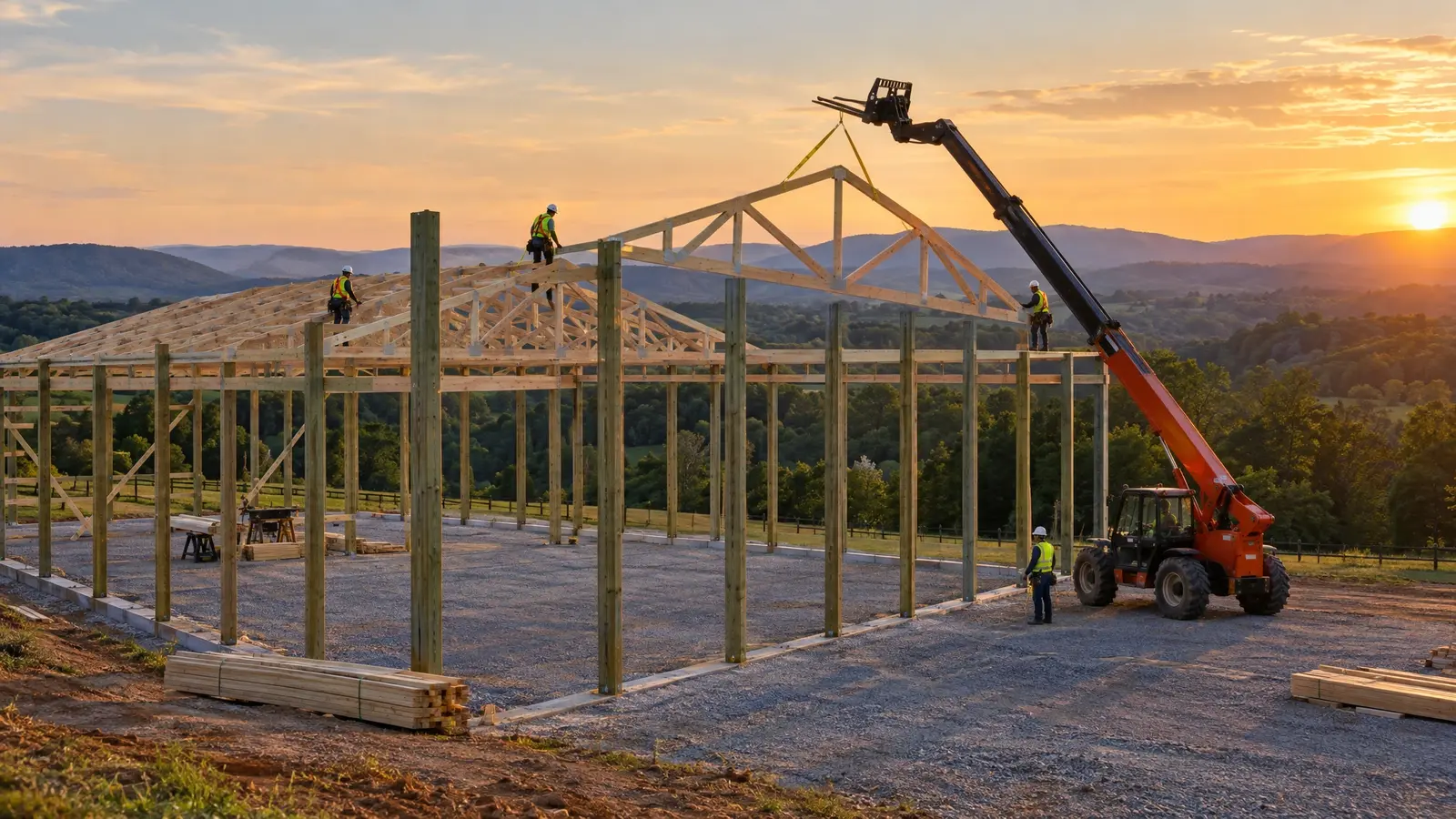
Post-frame (pole barn) construction uses large posts set in the ground or on piers, with girts, purlins and trusses. It spans wide areas without interior walls, goes up quickly and can be finished in many ways, from bare shop to full barndominium.
It is also easy to expand. Because the frame is modular, adding a bay or a lean-to is straightforward.
Stick-frame: the house method
Stick framing uses closely spaced studs and joists on a continuous foundation. It is the standard for houses and gives you walls that are easy to finish and insulate, but wide clear spans need engineered beams and more material.
For a home, it is the most familiar to inspectors, lenders and finish trades. For a large open barn, it is usually more expensive than post-frame.
Steel buildings: pre-engineered and efficient
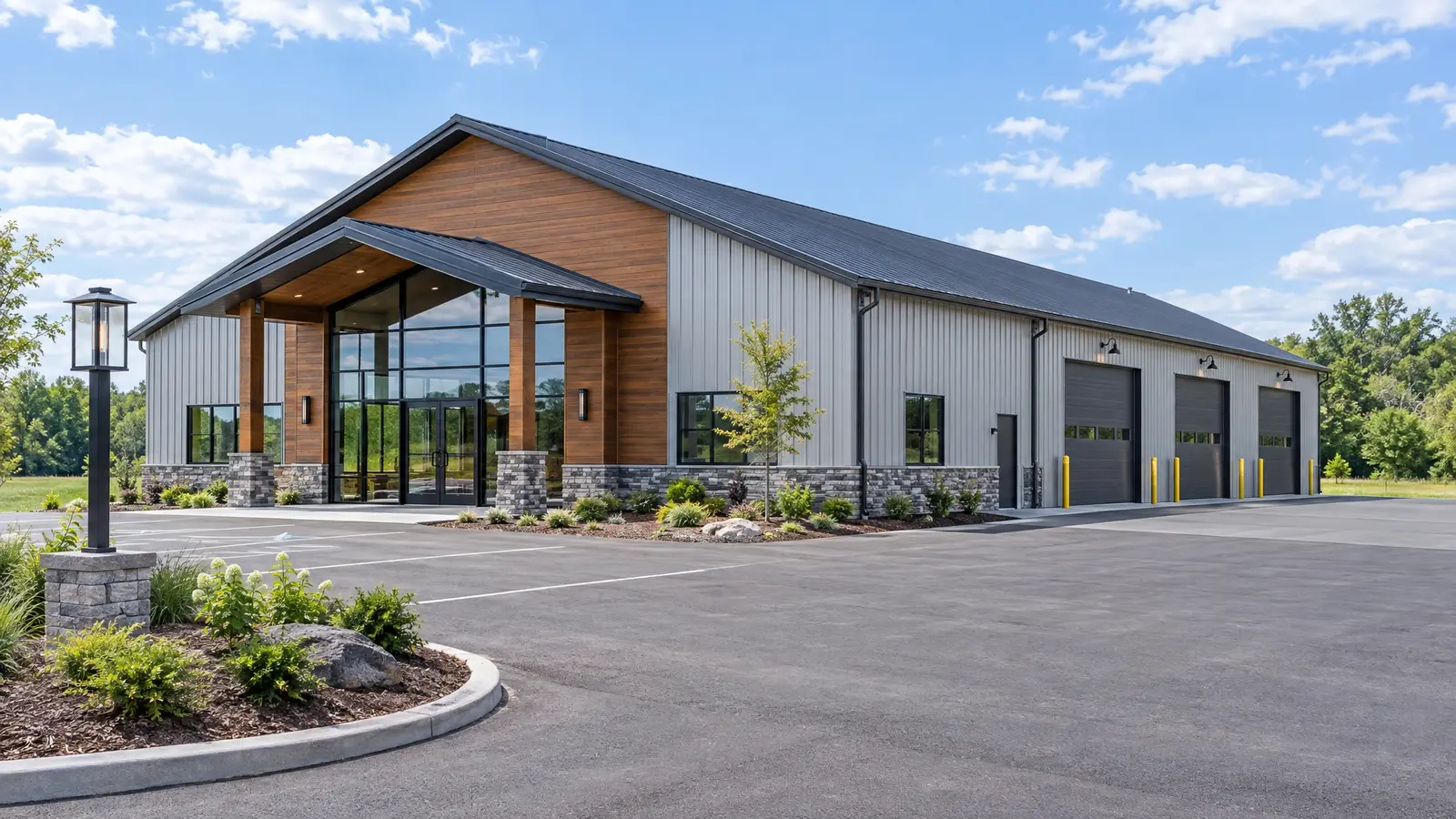
Pre-engineered steel buildings use steel columns and rafters, bolted together on a concrete foundation. They span very wide distances, are strong and fire-resistant, and suit commercial and industrial uses.
They require a concrete foundation with anchor bolts and are less forgiving of changes on site. Finishing the interior for living or events takes more planning than with wood framing.
Foundations and floors
Post-frame can set posts in the ground or on piers and add a slab later. Stick-frame and steel need continuous or engineered foundations and anchor details from the start.
If you are on a slope or have poor soil, the foundation choice can change the budget significantly.
Which should you choose?
For most barns, shops, horse buildings and barndominiums, post-frame is a strong choice. Choose stick-frame when you want a conventional home or have unusual architecture. Choose steel for large commercial or industrial buildings.
A good builder will tell you honestly which one fits, even if it is not what they build most often.
Match the structure to the use: post-frame for most barns, stick for houses, steel for big commercial buildings.