Rules vary by county and city
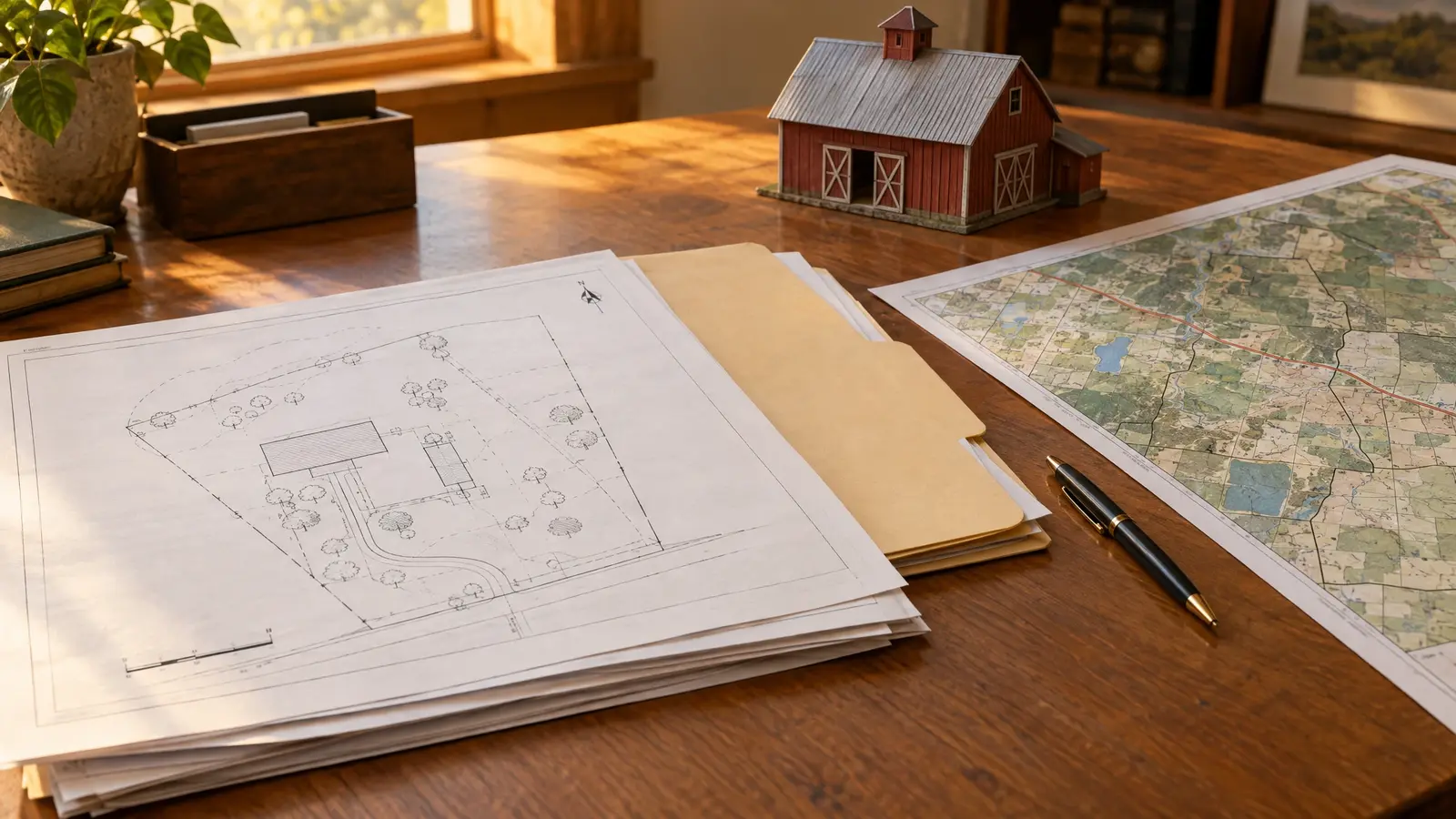
Permit rules in Middle Tennessee depend on whether your property is inside a city or in a county, and on the zoning of the parcel. Davidson, Williamson, Rutherford, Wilson, Sumner and Maury counties, and the cities within them, each have their own offices and requirements.
The best first step is to call the planning or codes office for your address and ask what a building of your size and use requires. We help with that conversation.
Accessory building limits and setbacks
Zoning usually limits how large an accessory building can be, how tall it can be and how far it must sit from property lines, roads and sometimes houses. Lots with flood zones, steep slopes or easements have more limits.
Knowing these numbers before designing avoids redesigns and delays.
Agricultural buildings
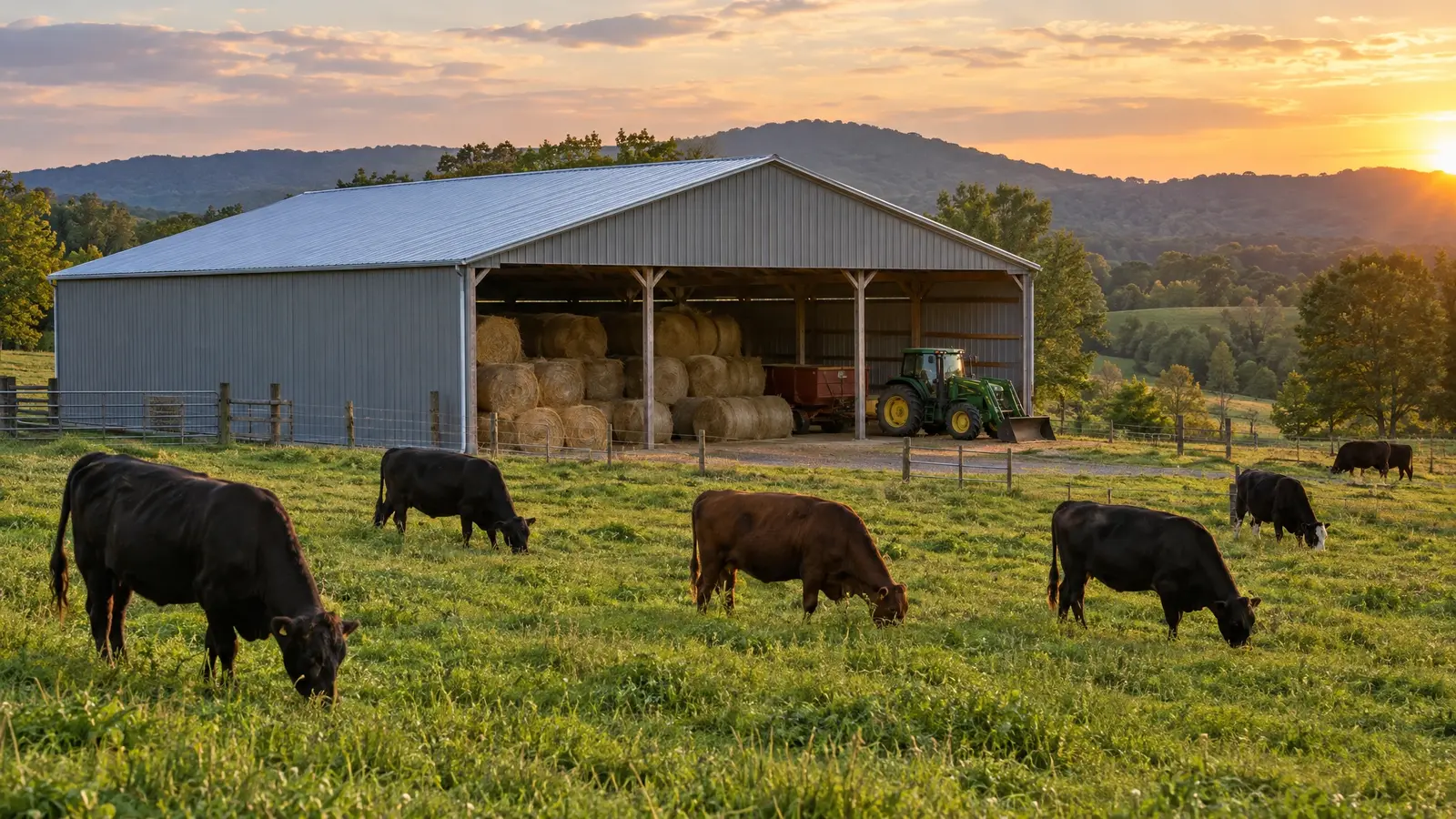
Tennessee law provides special treatment for buildings used for agriculture, and some counties exempt qualifying farm structures from certain building code requirements. To qualify, you generally have to show evidence of agricultural activity, and the process differs by county.
A barn used as a home, shop open to the public or event venue is generally not treated as an agricultural building.
Residential, commercial and assembly use
Barndominiums are dwellings and follow residential codes. Event barns and commercial buildings fall under stricter rules for exits, accessibility, fire protection and sometimes sprinklers and engineered plans.
Tell us the use at the beginning, because it changes the design.
Inspections and approvals
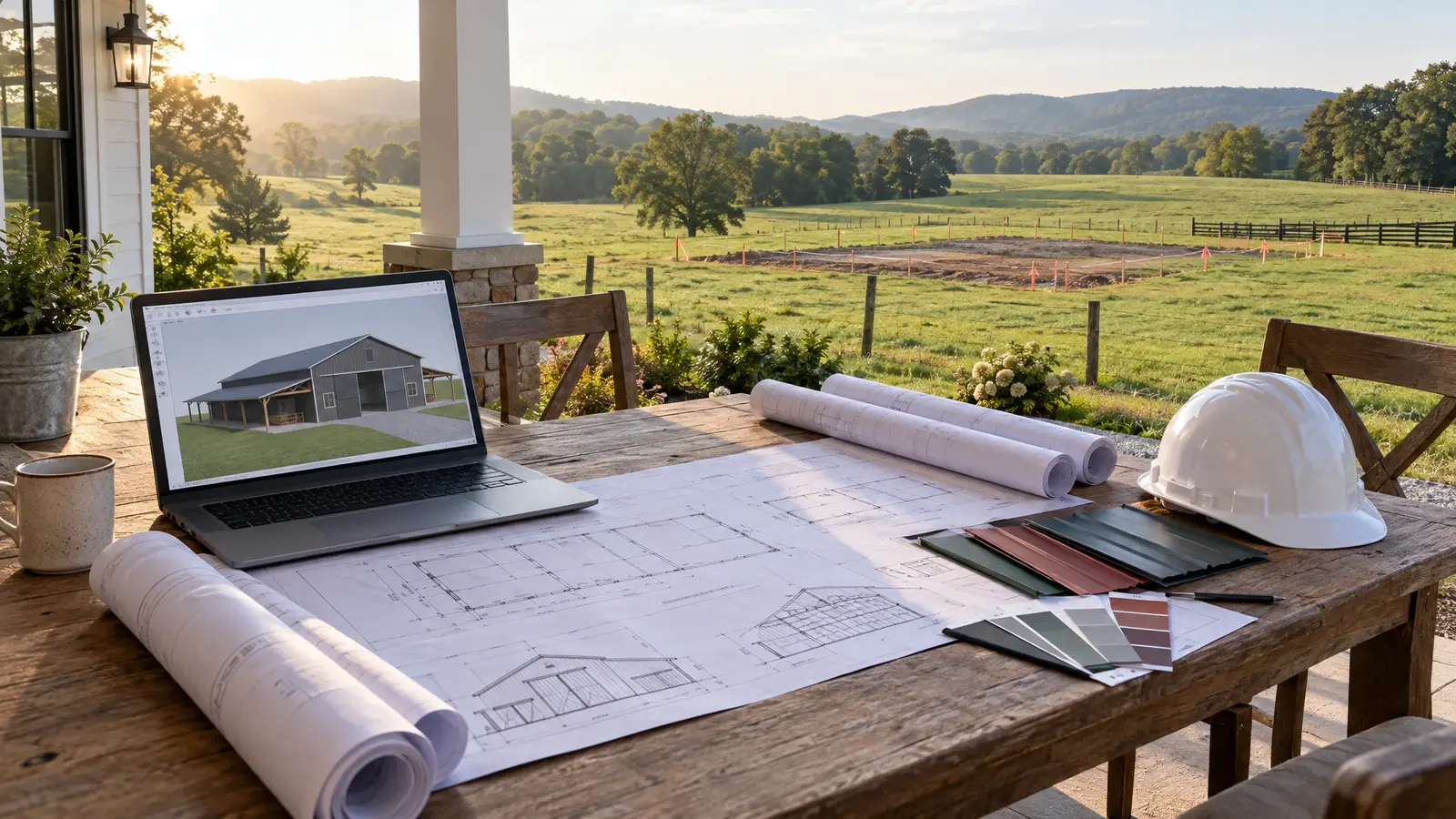
Expect inspections at stages such as footings or posts, framing, electrical and final. HOAs and covenants may also require review of drawings, colors and materials. We prepare the drawings and samples for these steps.
Call the codes office early, tell us the building's real use, and design to the rules for your address.