Start with the footprint and the height
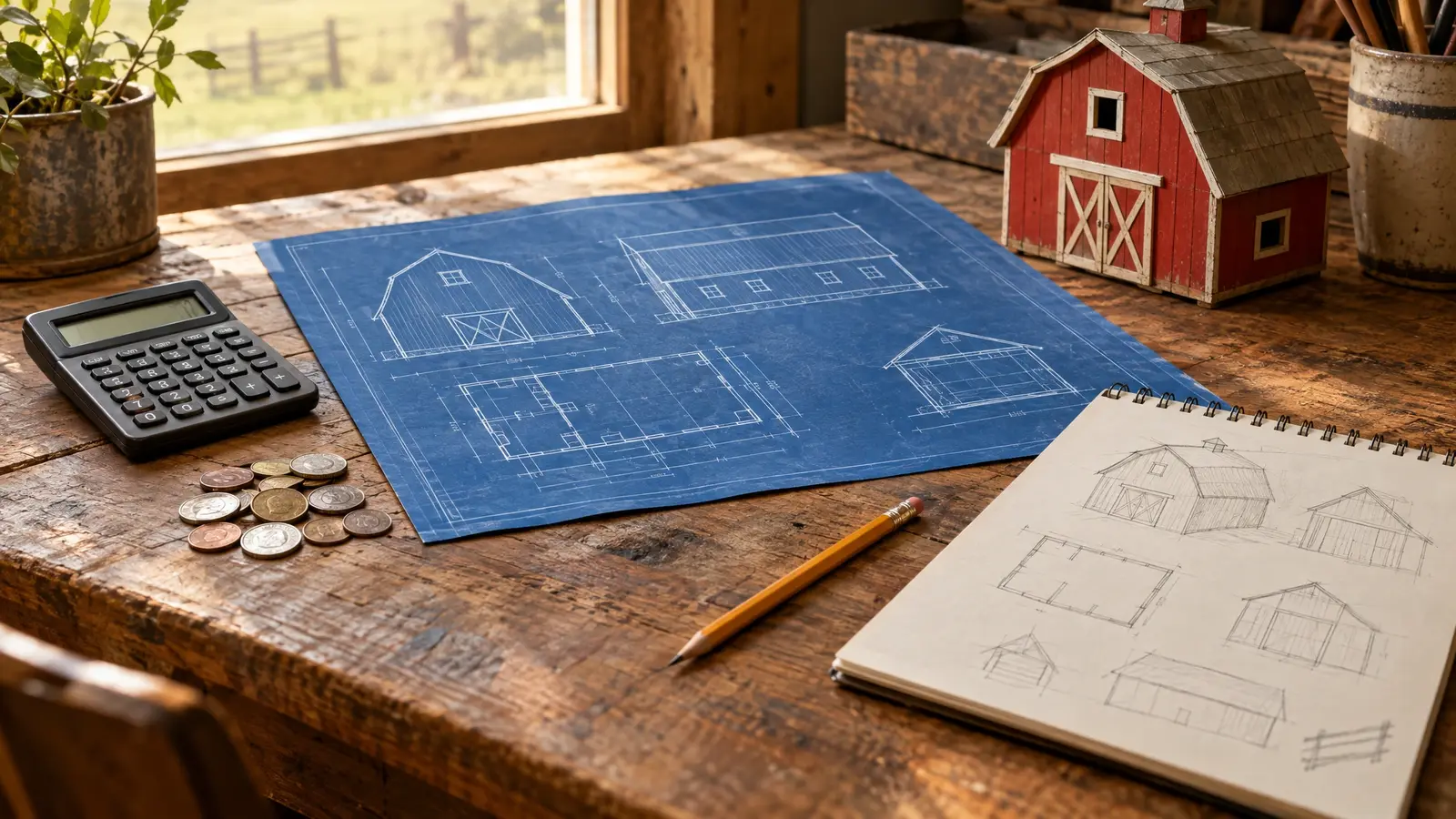
The biggest driver is how many square feet you cover and how tall the walls are. Doubling the width costs more than doubling the length, because wider spans need larger trusses. Taller sidewalls add posts, panels and often heavier framing, so choose the height your equipment and storage really need rather than a number that sounds nice.
A useful habit is to price two or three sizes at the same time. The step from 30 by 40 feet to 30 by 48 feet is often small, and it may buy you an extra bay that you will be glad to have in five years.
Finish level changes everything
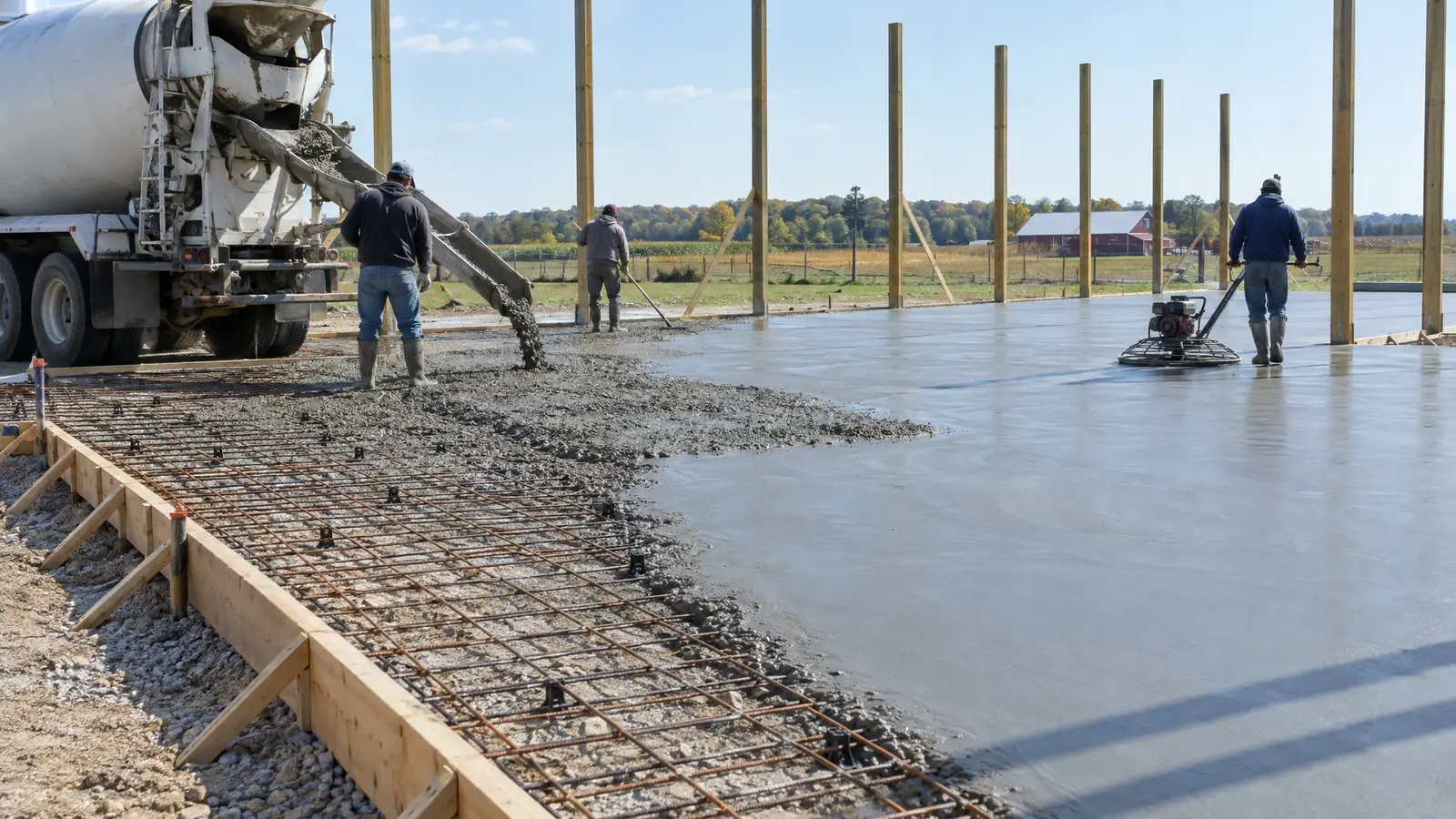
A bare shell with a gravel floor is the lowest-cost building. Add a concrete slab, insulation, interior walls, windows, upgraded doors and lighting and you have a different project, with a different price. Barndominiums and event barns sit at the top because they must meet residential or assembly requirements.
Think in layers: shell, floor, envelope, interior and systems. Many owners build the shell and slab first and finish the interior later, which spreads cost without compromising the design.
Doors, windows and details add up
Large sliding doors, insulated overhead doors, glass, cupolas and porches cost more than a plain wall. They also decide how the building looks and works, so it is worth spending where you will notice every day.
Ask for each item as a line in the proposal. That makes it easy to compare options, such as steel versus insulated overhead doors, without wondering what changed.
Site work is the hidden variable
Clearing, grading, drainage, gravel, trenching and driveway work can be a small or a very large part of the total, depending on slope, trees and soil. A flat, open pad is inexpensive; a wooded hillside is not. A site visit before pricing prevents surprises.
Utilities matter too. Running power, water and septic to a building a few hundred feet from the road can rival the cost of a small shell.
Permits, engineering and fees
Permits, engineered drawings, inspections and utility connection fees are real costs that belong in the budget. Requirements vary by county and city, and agricultural buildings are sometimes treated differently from storage or living space.
A good builder tells you early which of these apply and who handles them.
How to compare quotes fairly
Compare quotes with the same size, height, doors, slab, insulation and site work. Ask what is excluded, such as permits, concrete, trim or cleanup, and ask for a written scope, a payment schedule and warranty terms.
The cheapest quote often leaves something out. The best quote is the one you understand line by line.
Price the building in layers, spend where you touch and see it every day, and always compare quotes with the same scope.